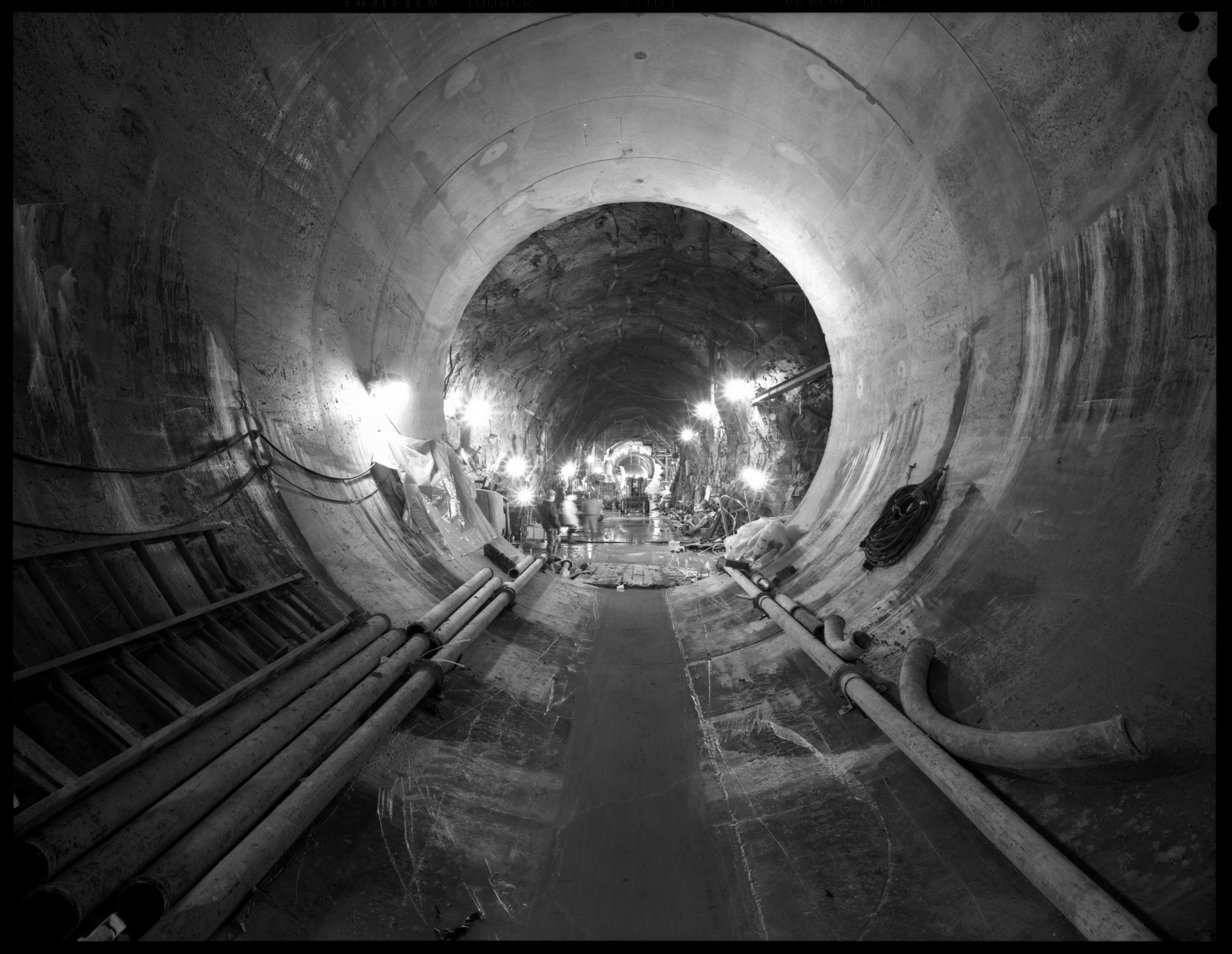
If you live in a high-rise in the Financial District or a converted loft in Tribeca, you probably give very little thought to the ground beneath your feet. We focus on the subway lines that carry us uptown and the fiber-optic cables that power our home offices. But there is another, much deeper network that is far more critical to our survival: the city’s water tunnels.
Lower Manhattan is served by a subterranean marvel of engineering. However, like any machine, these tunnels cannot run forever without a tune-up. Occasionally, the city must perform the high-stakes task of taking a major water tunnel offline. For residents, this can lead to temporary changes in downtown water conditions, but for the city’s longevity, it is an absolute necessity.
The “No-Day-Off” Problem: A Century of Continuous Service
To understand why a tunnel must be taken offline, you first have to appreciate how long they have been running. Lower Manhattan’s primary lifeline, City Water Tunnel No. 1, was completed in 1917. Its sibling, City Water Tunnel No. 2, went into service in 1936.
For nearly a century, these tunnels have operated 24 hours a day, 365 days a year, without a single full shutdown for inspection. In the world of infrastructure, this is unprecedented. Imagine driving a car for 100 years without ever pulling over to check the oil or the brakes. Because New York City’s demand for water was so high and there was no “spare” tunnel to take over the load, the Department of Environmental Protection (DEP) simply couldn’t turn them off.
Reason 1: The Activation of Redundancy (City Tunnel No. 3)
The primary reason we are seeing more frequent tunnel “offline” events today is actually a sign of progress. The city is in the final stages of completing City Water Tunnel No. 3, the largest capital construction project in New York City history.
The Manhattan leg of Tunnel No. 3 was activated in 2013, and as more sections are completed (with full completion of the Queens/Brooklyn legs expected by 2032), the city finally has “redundancy.” This means they can finally divert the flow of water away from the 1917 tunnel and into the new 21st-century tunnel. Taking Tunnel No. 1 offline allows engineers to send remote-controlled vehicles—and eventually human crews—into the depths to check for structural cracks and “tuberculation” (the buildup of mineral scale) that has been accumulating since the Wilson administration.
Reason 2: Repairing Deep-Rock Leaks
While the tunnels themselves are bored through solid Manhattan schist, they are not invincible. The Delaware Aqueduct, which provides roughly half of the city’s daily water supply, has been leaking between 15 million and 35 million gallons of water every day since the 1990s.
To fix this, the city built a 2.5-mile bypass tunnel 600 feet under the Hudson River. Connecting this bypass to the main line requires the aqueduct to be taken offline for months at a time. When a massive “trunk” line like this is shut down, the water must be re-routed through other parts of the grid. This shift in pressure and direction is a common cause of the sediment surges noted in many neighborhood reports.
Reason 3: Modernizing Riser Valves
Even if the deep tunnel is structurally sound, the “risers”—the vertical pipes that bring water from the tunnel up to the street-level mains—require maintenance. Many of the valves that control this flow in Lower Manhattan are decades old.
Taking a tunnel section offline allows crews to replace these massive valves. If a valve fails in the “open” position during a water main break, the city cannot stop the flooding. Replacing these components is a preventative measure that ensures we can handle future infrastructure alerts with precision.
The Impact on Your Tap: What to Expect
When a tunnel is taken offline and the “spare” is activated, the water is forced through the system in ways it hasn’t moved in years.
- Directional Shifts: Water that usually flows from north to south might suddenly flow from west to east to reach your building. This “reverses” the flow over settled sediment, kicking up the fine iron silt that causes brown water.
- Source Variations: Depending on which tunnel is offline, your water might shift from the Catskill system to the Croton system. This can result in a slight change in taste or mineral content, a topic we cover extensively in our FAQ.
- Pressure Fluctuations: As the building plumbing adjusts to the new “feed,” you may notice temporary air pockets or “sputtering” faucets.
Is It Safe?
The Environmental Protection Agency (EPA) and city health officials closely monitor every tunnel shutdown. While the water may look “cloudy” (due to air bubbles) or “tea-colored” (due to iron), it remains chemically safe. The city increases its testing frequency during these windows to ensure that the “new” flow remains within all health parameters.
Conclusion: Future-Proofing the Island
Taking a water tunnel offline is a logistical nightmare for the city and a temporary nuisance for residents, but it is the only way to ensure that Lower Manhattan remains habitable for the next hundred years. Without these maintenance windows, we risk a catastrophic failure of a century-old system that has no “off” switch.
If you have noticed a persistent change in your water clarity or pressure that seems to coincide with a major city announcement, we want to hear about it. Tracking these patterns helps the community stay ahead of the curve. You can reach out to us via our contact page to share your building’s experience. For more updates on the hidden world beneath our streets, keep an eye on our blog.