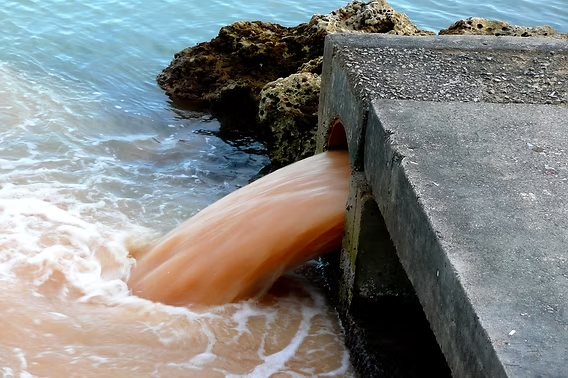
For residents of Jersey City, the “brown water alert” has become an all-too-familiar part of urban life. Whether it’s a massive water main break on Route 1&9 or routine maintenance by the Jersey City Municipal Utilities Authority (JCMUA), the sight of rust-colored water flowing from a kitchen tap is a frequent occurrence. While the Hudson River acts as a political and geographic boundary, the plumbing challenges faced by our neighbors in Jersey City offer a vital masterclass for those living in Downtown Manhattan.
If you live in a Financial District (FiDi) high-rise or a Tribeca loft, you might feel insulated from the dramatic water main failures seen across the river. However, the systems are more similar than they are different. By examining why Jersey City experiences these “color events,” Downtown residents can better understand their own downtown water conditions and prepare for the inevitable shifts in our aging local grid.
The Anatomy of a Brown Water Event
In Jersey City, brown water is almost always the result of a “scouring” event. The city’s infrastructure is a mix of modern ductile iron and century-old cast iron. Over decades, these iron pipes develop a layer of internal oxidation and mineral deposits. Under normal, steady-state flow, these deposits remain stuck to the pipe walls.
However, any sudden change in the water’s velocity or direction—caused by a fire hydrant being opened, a pipe bursting, or a large building’s booster pumps kicking on—acts like a high-pressure hose inside the pipe. It “scours” the rust off the walls and carries it downstream. This is exactly what happens during our own infrastructure alerts in Manhattan. The lesson from Jersey City is that brown water is rarely about “dirt” entering the system from the outside; it is about the “skin” of the pipes shedding from the inside.
Lesson 1: The “Proximity Myth”
One thing Jersey City residents have learned the hard way is that you don’t have to be near a water main break to see brown water. Because the water grid is a pressurized, interconnected loop, a disturbance in the Heights can cause sediment surges in Bergen-Lafayette or Downtown JC.
Downtown Manhattan residents often make the mistake of thinking that because there is no construction on their specific block, their water is “safe” from discoloration. In reality, a hydrant flush three blocks away can reverse the flow in your street’s main, pulling sediment into your building plumbing. We track these wide-area impacts in our neighborhood reports, showing how a single point of failure can ripple across the entire lower tip of the island.
Lesson 2: The Danger of “The First Flush”
When Jersey City issues a brown water alert, the standard advice is to “run your cold water until it clears.” But there is a nuance to this that many residents miss.
If you turn on your hot water while the street main is surged with sediment, you are effectively “vacuuming” that iron silt directly into your hot water heater or your building’s central boiler. Once that sediment settles in the bottom of a tank, it is incredibly difficult to remove. It can lead to “hot water yellowing” that persists for weeks after the city’s water has cleared.
What Downtown residents should learn: If you see any tint in your water, shut off the hot water valve immediately. Perform your clearing flushes using only the cold water tap—ideally at a high-flow fixture like a bathtub. This protects your expensive internal appliances from long-term mineral damage.
Lesson 3: The Fragility of Combined Sewer Systems
Jersey City, like Manhattan, utilizes a Combined Sewer System (CSS). This means that during heavy rainfall, the sewers can become overwhelmed. While the drinking water and sewer lines are physically separate, they share the same narrow subterranean corridors.
Heavy rain often leads to soil shifting and “subsidence,” which puts physical stress on the brittle cast-iron water mains. Jersey City’s frequent alerts after rainstorms serve as a warning to Downtown Manhattan: our “yellow water” events often peak during the spring thaw and autumn storm seasons. You can find more details on how weather impacts your tap in our full blog archive.
Lesson 4: High-Rise Vulnerability
Jersey City’s waterfront is lined with soaring luxury towers, much like the Financial District. These buildings use powerful suction tanks and booster pumps to reach the upper floors.
When a brown water event hits Jersey City, these towers often suffer the most. Why? Because the building’s pumps are designed to pull water aggressively from the street. If the street main is filled with “slugs” of rust, the building’s pumps will pull that concentrated sediment into the building’s internal filtration system, often blinding the filters instantly.
If you live in a FiDi high-rise, your building’s “suction” makes you more vulnerable to street-level disturbances than a resident in a 3-story brownstone. If you notice a sudden drop in pressure along with discoloration, it’s a sign that your building’s filters have been “sacrificed” to protect the pumps. This is a common topic in our FAQ.
A Resident’s Action Plan: The Jersey City Method
If a neighbor reports brown water or you see a city crew working on your corner, follow this checklist developed from years of observing the Jersey City grid:
- Cease Water Usage: Stop laundry and dishwashers immediately.
- The “Cold Bathtub” Test: Periodically run the cold water in your bathtub for 30 seconds to check the color. Do not use your kitchen sink or bathroom vanity for testing, as their aerators are easily clogged.
- Bypass Filtration: If you have an under-sink Reverse Osmosis (RO) system or a refrigerator filter, try to avoid using them until the water has cleared. Passing “brown” water through these filters can significantly shorten their lifespan.
- Document and Report: The Environmental Protection Agency (EPA) monitors “secondary contaminants” like iron and manganese. While they are aesthetic issues, the city needs to know where the “hot spots” are. Use our contact page to report localized events so we can add them to the map.
Conclusion: One River, Shared Pipes
The brown water alerts in Jersey City aren’t just a Jersey problem; they are a preview of the challenges facing all aging urban coastal environments. Lower Manhattan’s infrastructure is just as old, just as stressed, and just as prone to the physical realities of iron oxidation.
By looking across the river, we can see our own future. We can learn to be proactive rather than reactive, protecting our building plumbing and our appliances from the “iron surges” that define modern city living.
Stay informed, keep an eye on the color of your “first flush,” and remember that in the world of urban water, knowledge is the best filter.