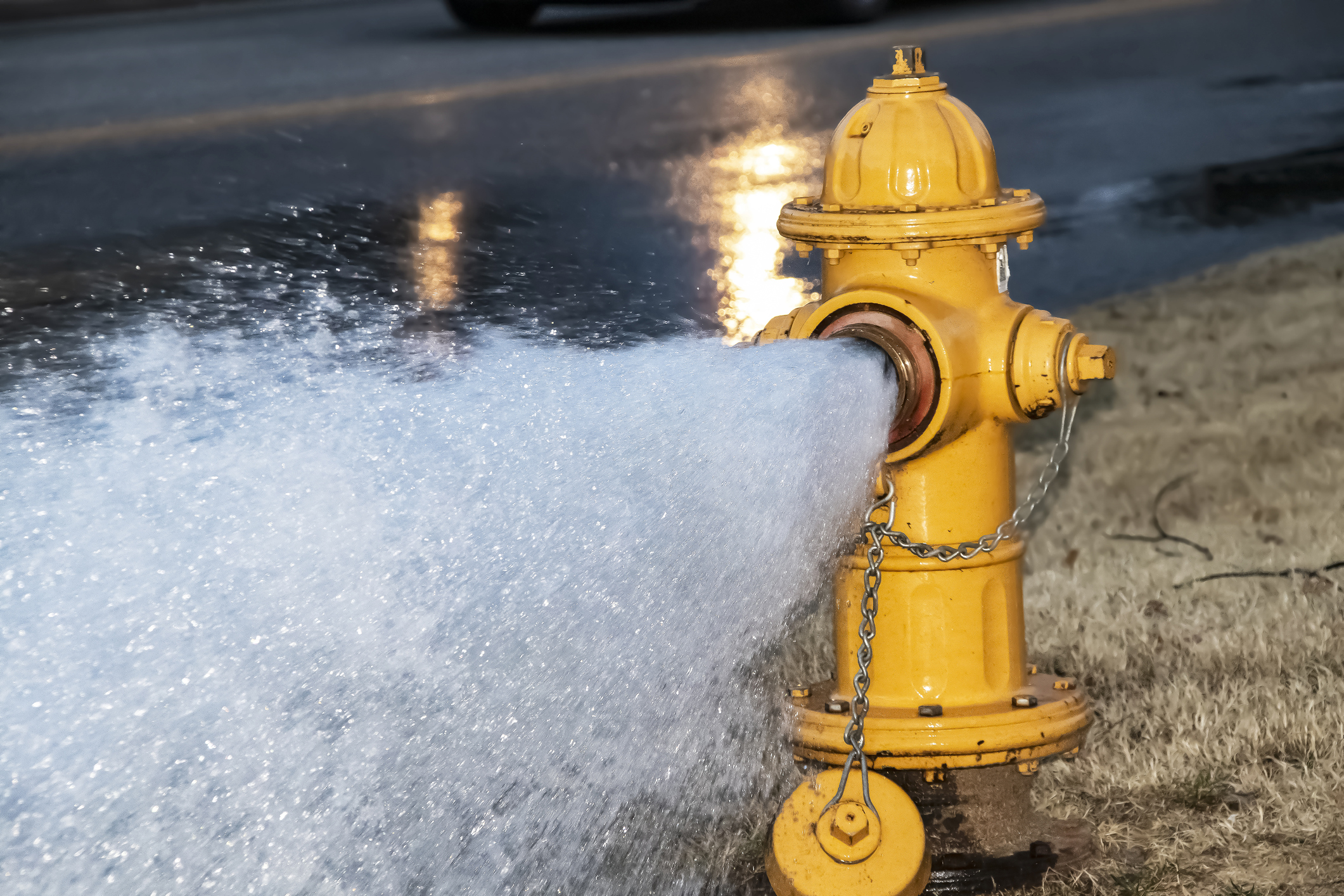
To the untrained eye, the water infrastructure of West Orange, New Jersey, and New York City could not look more different. West Orange is a suburban community nestled along the ridges of the Watchung Mountains, relying on a mix of local storage tanks and regional transmission lines. New York City, by contrast, is a dense metropolis fed by a massive network of upstate reservoirs delivering over a billion gallons of water a day through subterranean rock tunnels.
Yet, despite these vast differences in scale, topography, and architecture, both systems are bound by the exact same laws of physics and chemistry. When a utility crew opens up a fire hydrant for routine maintenance in West Orange, the hydraulic reactions that occur inside those suburban pipes provide a perfect, micro-scale preview of the discoloration patterns that regularly affect New York City apartments.
For property managers, tenants, and homeowners tracking regional utility trends, understanding this connection is a valuable tool for decoding downtown water conditions on either side of the Hudson River.
The Common Denominator: Biofilms, Mineral Crusts, and Tuberculation
To understand why hydrant flushing causes water to run discolored, you have to look at what happens inside a water main when the water is not moving quickly.
Whether a pipe is buried beneath a quiet street in West Orange or a bustling avenue in Manhattan, its interior walls are not perfectly smooth. Over decades of service, water mains develop an internal layering known as tuberculation. This is a mix of naturally occurring mineral crusts (mostly iron, manganese, and calcium), fine environmental silt, and microscopic biological films that adhere to the pipe surface.
Under normal daily conditions, municipal water glides smoothly over this crust because the flow velocity remains relatively low and stable. However, routine maintenance completely disrupts this equilibrium. Staying updated via localized infrastructure alerts is the best way for residents to anticipate when these disruptions will occur in their immediate grid.
The Mechanics of Hydrant Flushing: The Scouring Velocity
Hydrant flushing is a controlled engineering practice designed to clean the water distribution system. When a utility technician opens a fire hydrant completely, it creates a localized drop in pressure that forces water through the surrounding mains at a much higher speed than normal.
This rapid increase in speed introduces a mechanical phenomenon called “scouring velocity.”
[Stable, Low-Velocity Flow]  --> Mineral crusts and rust sit undisturbed on pipe walls.
                                      │
                                      ▼ (Hydrant Opens Completely)
[High-Velocity Scouring Flow] --> Shearing force rips iron oxide and silt into suspension.
                                      │
                                      ▼ (Tap is Turned On)
[Temporary Discoloration]     --> Amber, orange, or dark gray water appears at the faucet.
As the water rushes forward, the physical shearing force literally rips the loose iron oxide, manganese scale, and accumulated silt off the interior pipe walls, pulling it into suspension. The water running out of the hydrant—and temporarily through the nearby service lines—turns an unmistakable shade of amber, orange, or dark gray.
Why West Orange Predicts NYC’s Plumbing Reactions
Because West Orange features a high concentration of historic, unlined cast-iron water mains dating back to the early-to-mid 20th century, its infrastructure is incredibly sensitive to these velocity changes. A flush in West Orange creates a rapid, dramatic spike in iron concentration that shows up almost instantly at residential taps.
This hyper-sensitive suburban network acts as a predictive model for New York City’s sprawling water zones for several key reasons:
1. The Pre-War Pipe Parallel
While New York City has modern concrete-lined mains in many areas, thousands of miles of its secondary distribution grid—the older pipes feeding individual blocks in Manhattan, Brooklyn, and the Bronx—are made of the exact same unlined cast iron found in West Orange. When the NYC Department of Environmental Protection (DEP) flushes hydrants or coordinates with the FDNY for spring inspections, the shearing forces interact with the exact same vintage of iron rust, yielding identical orange-to-brown discoloration patterns.
2. The Shared Impact of “Water Hammer” and Pressure Surges
Because West Orange has steep hills, its water grid uses pressure-regulating valves to manage gravity. When a hydrant is shut off too quickly after flushing, it sends a shockwave back through the system, a phenomenon known as “water hammer.” This shockwave shakes the pipes, dislodging even more rust farther down the line.
In NYC, this same shockwave effect happens vertically. When a street-level hydrant is opened or closed, the pressure surge ripples up the vertical utility stacks of nearby apartment buildings, rattling internal lines and causing sudden, unexpected bursts of brown water in upper-floor units. Understanding these vertical mechanics is critical for anyone managing high-density building plumbing configurations.
3. Construction-Driven Velocity Shifts
In West Orange, water main flushes are usually scheduled and predictable. In New York City, however, a “flushing event” is frequently accidental, triggered by continuous street construction or real estate development. When contractors hook up high-capacity lines for a new high-rise project, they pull massive volumes of water instantly, creating a localized scouring velocity that mimics a planned hydrant flush and discolors the water for blocks around.
Comparing the Discoloration Footprint
| System Attribute | West Orange Hydrant Flushing | NYC Discoloration Patterns |
| Primary Pipe Material | Legacy unlined cast iron and modern ductile iron | Mixed pre-war unlined iron and modern concrete-lined loops |
| Discoloration Triggers | Scheduled seasonal maintenance and utility upgrades | Hydrant testing, construction draw-downs, and main breaks |
| Dominant Visual Tint | Bright orange, yellow, or rust-red (Heavy Iron Oxide) | Dark amber, cloudy brown, or grayish silt (Iron + Mineral Scale) |
| Grid Response | Concentrated, neighborhood-wide pressure adjustments | Zonal, block-specific surges that migrate into vertical building stacks |
Managing the Aftermath at the Tap
Whether you are living in an Essex County colonial or a Manhattan high-rise, the protocol for handling flushing-induced discoloration remains identical.
First, residents should avoid running hot water when discoloration is active. Drawing rust or silt into a hot water heater causes the sediment to settle at the bottom of the tank, leading to mechanical wear and reducing energy efficiency. Second, utilities on both sides of the river recommend running the cold water tap closest to your main water shut-off (such as a basement utility sink or a bathtub) for three to five minutes until the water streams completely clear.
To see how these structural challenges vary across specific districts, reviewing comprehensive neighborhood reports can clarify how individual zones react to system-wide maintenance.
Staying educated through a dedicated water quality blog provides homeowners and urban residents alike with the technical insights needed to protect their fixtures and appliances. Municipal water flushing is a necessary part of infrastructure health; by looking at how small-scale suburban systems react to maintenance, city dwellers can better predict, understand, and navigate the water patterns in their own apartments.