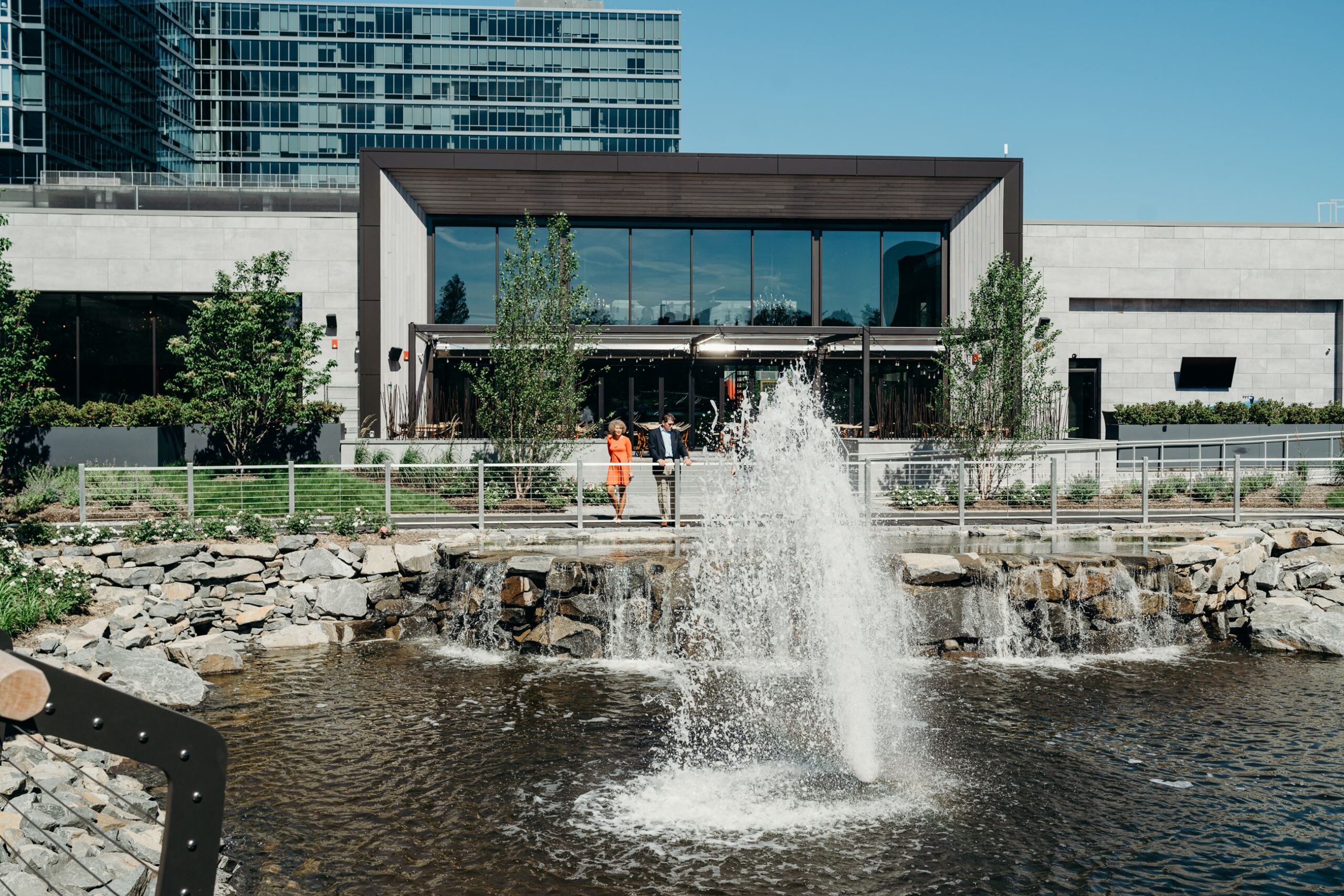
At first glance, Fort Lee, New Jersey, and Downtown Manhattan seem like architectural opposites. One is defined by the soaring cliffs of the Palisades and mid-century luxury high-rises; the other is a dense, historical labyrinth of colonial-era streets and glass-and-steel Financial District (FiDi) towers. However, for a civil engineer or a building superintendent, these two areas are strikingly similar.
The way water moves through a 30-story tower in Fort Lee often mirrors the hydraulic patterns of a converted office building on Broad Street. From the reliance on high-pressure pumping to the challenges of aging vertical “risers,” Fort Lee and certain Downtown pockets are subterranean cousins. Understanding these parallels is the key to navigating the specific downtown water conditions that impact residents on both sides of the George Washington Bridge.
The High-Rise “Vacuum”: A Shared Pumping Philosophy
The most significant parallel between Fort Lee and Downtown Manhattan is the sheer verticality of the housing stock. Unlike the low-rise brownstones of Brooklyn or the garden apartments of suburban Jersey, both Fort Lee and FiDi rely on “active” plumbing.
In a standard residential neighborhood, street pressure is enough to get water to your kitchen sink. But once a building exceeds six stories, gravity becomes an adversary. Both Fort Lee high-rises and Downtown towers utilize massive booster pumps located in the basement. These pumps “yank” water from the municipal mains and blast it upward.
This creates a shared phenomenon: the “Neighborhood Draw.” When several 40-story towers on a single block in Fort Lee—or a cluster of luxury conversions in FiDi—all activate their pumps during the 7:00 AM “shower rush,” they create a localized drop in street pressure. This is a recurring topic in our neighborhood reports, where residents in smaller, adjacent buildings often report a sudden “trickle” in their faucets while the “giants” next door are drinking their fill.
The Transition from Commercial to Residential Guts
A fascinating parallel exists between the older “Gold Coast” towers of Fort Lee (built in the 1960s and 70s) and the office-to-residential conversions common in Downtown Manhattan.
Many FiDi buildings were originally designed for commercial use—meaning they were built to handle thousands of toilets flushing but very few showers or washing machines. When these buildings are converted to luxury condos, the building plumbing undergoes a massive “stress test.”
Fort Lee’s older towers face a similar mid-life crisis. As these buildings are renovated and modern “high-flow” multi-head showers are installed, the original 1970s pumping systems are pushed to their limits. In both cases, the result is often “pressure surging”—where the water cycles between high and low pressure as the building’s mechanical brain tries to keep up with modern residential demand. This erratic flow is a common complaint found in our FAQ.
The Sediment Surge: Scouring the Vertical Line
In both Fort Lee and Downtown Manhattan, the “verticality” of the pipes leads to a specific type of water discoloration. Because the water is being moved at such high velocity to reach the penthouses, it creates a “scouring” effect on the interior of the pipes.
In Manhattan, this scouring happens in the century-old cast-iron street mains. In Fort Lee, while the street mains might be newer, the internal “riser” pipes of the 50-year-old towers are often made of galvanized steel. Over decades, these steel pipes develop internal rust.
When a building’s pumps kick into “high gear” or after a nearby infrastructure alert causes a temporary shutdown, the subsequent surge of water “scours” the rust off the vertical lines. The result is “yellow water” that appears only on the upper floors. Residents often think it’s a city-wide problem, but in both Fort Lee and FiDi, it is frequently a localized mechanical event within the building’s own vertical veins. Comparing lower- and upper-floor samples through apartment building water testing in Manhattan can help investigate that pattern rather than relying on the color at a single faucet.
Managing the “Air in the Lines” Phenomenon
If you’ve lived in a high-rise in either location, you’ve likely experienced the “milky water” phenomenon—water that comes out white and cloudy but clears after a minute.
This is almost always caused by dissolved oxygen being forced into the water by high-pressure pumps. Because Fort Lee and FiDi both use similar “Variable Frequency Drive” (VFD) pumps, the water is often “over-aerated.” As we detail in our blog, this is harmless, but it is a physical signature of living in a high-pressure, high-rise environment. The air bubbles are a sign that your building’s pumps are working hard to overcome the weight of the water column above you.
The “End-of-Line” Infrastructure Vulnerability
Fort Lee sits at the end of many major New Jersey water arteries, just as the Financial District sits at the terminal tip of Manhattan. Being at the “end of the line” means that both areas are the final destination for any sediment or mineral buildup traveling through the regional grid.
In New Jersey, this often involves “hard water” minerals. In Manhattan, it involves iron and manganese from the 100-year-old pipes of the NYC DEP system. In both pockets, the “terminal” nature of the grid means that water stays in the pipes slightly longer, which can lead to localized “stale” tastes or temperature gain during the summer months.
How Residents Can Adapt to These Parallel Patterns
Whether you are looking at the Manhattan skyline from a Fort Lee balcony or looking at the GWB from a Tribeca penthouse, the rules for protecting your home are the same:
- Monitor Your Aerators: High-pressure pumping means more “pipe scale” (tiny bits of metal or mineral) being forced into your faucet screens. Make it a quarterly habit to unscrew and rinse your aerators.
- The “Slow Cold Flush”: If you see discoloration, run the cold water in your bathtub—not the sink—at a moderate flow. Do not use the hot water, as it will pull that sediment into your building’s or unit’s heat exchanger.
- Filtration Awareness: If you use a high-end filtration system, be aware that the “scouring” common in these high-rise pockets can “blind” (clog) a filter much faster than in a suburban environment. Check your filters twice as often as the manufacturer recommends.
- Communicate with the Super: If the water is only yellow in your unit but clear in the lobby, the problem is likely in your building’s vertical risers. Reference our contact page for tips on how to report these specific building-side issues.
Conclusion: A Shared Mechanical Heritage
The high-rises of Fort Lee and the towers of Downtown Manhattan are part of the same “vertical family.” They share the same mechanical heartbeats—the roar of booster pumps, the stress of gravity, and the challenges of moving water through aging, high-pressure pipes.
By recognizing these parallels, residents can move past the frustration of “mystery” water issues and understand the physical realities of their environment. Whether you are on the Jersey side or the New York side, the water at your tap is a product of a massive, complex, and occasionally temperamental machine. Stay informed, monitor your local conditions, and remember that in the world of high-rise living, your plumbing is a shared journey.