The Financial District (FiDi) is the oldest corner of New York City, a place where 21st-century glass skyscrapers stand atop 17th-century street patterns. While the world above is busy with global commerce, the world below is a silent, high-stakes honeycomb of infrastructure. Navigating a glass of water to a faucet on Exchange Place is not a simple journey; it is a trek through one of the most congested and complex utility environments on Earth.
In FiDi, “underground” doesn’t just mean dirt. It means a multi-layered maze of steam pipes, fiber-optic cables, gas lines, and century-old subway tubes. Understanding how water maneuvers through this dense network helps explain why local downtown water conditions can be so sensitive to nearby street work.
The Descent: From the Catskills to the Tip of Manhattan
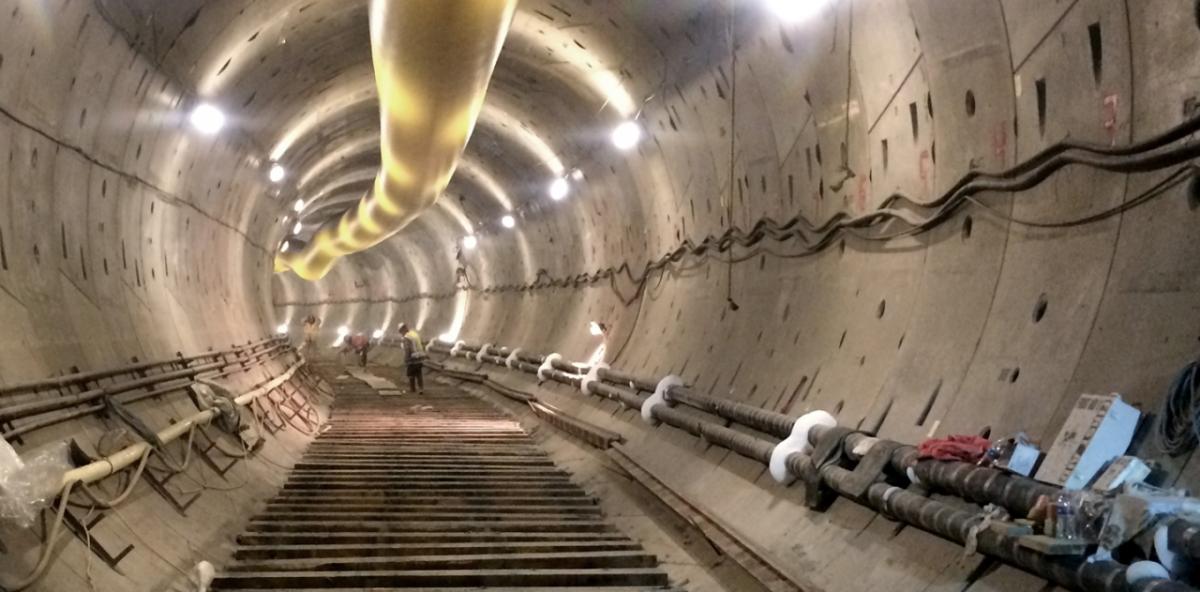
The journey begins over 100 miles north of Wall Street, but the final leg of the trip occurs deep within the bedrock of Manhattan. Most of FiDi’s water arrives via City Water Tunnel No. 1 (completed in 1917) and the newly operational sections of City Water Tunnel No. 3.
These tunnels are not the standard pipes you might imagine; they are massive, concrete-lined arteries carved into the solid granite of the island, hundreds of feet below the subway level. Water moves through these tunnels primarily by the force of gravity, gathering enough pressure from its journey from the upstate reservoirs to “whoosh” toward the southern tip of the island.
The Riser Shafts: Breaking the Surface
Because the main water tunnels are so deep—up to 800 feet down—the water has to be brought up to the “utility zone” just beneath the asphalt. This happens through vertical riser shafts. In the Financial District, these shafts are the critical link between the deep-rock tunnels and the street-level grid.
When a riser shaft is opened or adjusted, it can create a massive surge of pressure. If you have been keeping an eye on our Infrastructure Alerts, you’ve likely seen notices about “valve exercises” or “shaft maintenance.” These operations are essential, but because FiDi is the “end of the line” for many of these pipes, any air or sediment kicked up in the riser has nowhere to go but into the local building service lines.
Navigating the “Utility Jungle”
Once the water reaches the upper 10 to 20 feet of the subterranean world, things get crowded. FiDi’s utility network is a masterclass in spatial problem-solving. A water main under Maiden Lane doesn’t have a straight path; it must weave around:
- Steam Tunnels: The Con Edison steam system—the largest in the world—runs at incredibly high temperatures. Water mains must be carefully insulated or spaced away from these lines to prevent the drinking water from being heated or the iron pipes from corroding prematurely.
- Subway Envelopes: The 4, 5, J, and Z lines act as massive concrete barriers. Water mains often have to dive under or curve sharply around these “envelopes,” creating pockets where sediment can naturally accumulate.
- Legacy Infrastructure: In parts of the neighborhood, you can still find disused “voids” and remnants of the original Croton Aqueduct system from 1842.
This congestion is why a simple repair on a nearby block can cause discolored water in your building. When a utility crew is digging to reach a fiber-optic cable, the vibrations can disturb the water mains that are packed tightly alongside them. To see how these disturbances are currently affecting your specific area, check our latest Neighborhood Reports.
The Final Mile: Building Service Lines
The last stage of the journey is the transition from the city’s massive iron mains to your building’s specific building plumbing. In the Financial District, many of these “service lines” are also decades old.
In a neighborhood this dense, water velocity is constantly changing. During the workday, the millions of people in FiDi create a massive draw on the system, keeping water moving fast. At night or on weekends, the velocity drops. This change in speed allows the fine silt and mineral deposits common in NYC water to settle in the low points of the utility tunnels. When the Monday morning rush begins and the pumps kick on, that sediment is swept up and delivered to the lower floors of the district’s high-rises.
Is This Network Safe?
Despite the age and the congestion, FiDi’s water remains some of the highest-quality in the world. The NYC Department of Environmental Protection (DEP) maintains a rigorous sampling program, with over 1,000 sampling stations across the five boroughs to ensure that the “utility jungle” isn’t contaminating the supply.
However, the physical reality of the pipes means that “turbidity” (cloudiness) is a frequent visitor in Lower Manhattan. If you’ve ever wondered why your water looks “milky” for a few seconds before clearing, it’s usually just tiny air bubbles trapped during the water’s turbulent journey through the riser shafts and around the subway tubes. You can find more on the difference between air and sediment in our FAQ.
The Impact of Modernization
The ongoing construction of Water Tunnel No. 3 is the neighborhood’s best hope for more consistent water quality. By providing a third “super-highway” for water, the city will eventually be able to shut down and inspect Water Tunnels 1 and 2 for the first time in over a century. For FiDi residents, this means fewer emergency repairs and more stable pressure zones.
Until then, we are living alongside a subterranean relic that is as fascinating as it is temperamental. For more stories on the “underworld” of Lower Manhattan, feel free to browse our full blog archive.
If you have noticed a persistent metallic taste or a change in your building’s water pressure that seems tied to local street excavation, we’d like to know. Documentation helps us identify patterns in the FiDi grid. You can reach out directly via our contact page to report your findings.